What are you doing? My wife asked, seeing me, unusually, linger at the mirror.
Nothing, I answered, I look here, inside my nose, this nostril, by pressing it I feel a little pain.
My wife smiled and said:
I thought you looked which way your nose is hanging
I turned like a dog that someone had stepped on his tail:
My nose?
And my wife quietly:
Yes, my dear. Look good: your nose is hanging to the right side.
I was twenty-eight years old, and since then I have always thought my nose, if is not exactly beautiful, is at least very decent, as with all other parts of my person.
So I had been easy to accept and support, what they usually accept and support all of those, who have not had the misfortune of sorties a deformed body: thatis silly to complain as we did physically .
The sudden and unexpected discovery of this defect so annoyed me as an undeserved
punishment.
Vitangelo Moscarda discovers by way of a completely irrelevant question that his wife poses to him that everyone he knows, everyone he has ever met, has constructed a Vitangelo person in their own imagination and that none of these personas corresponds to the image of Vitangelo that he himself has constructed and believes himself to be. The reader is immediately immersed in a cruel game of falsifiying projections, mirroring the reality of social existence itself, which imperiously dictate their rules. As a result, the first, ironic "awareness" of Vitangelo consists in the knowledge of that which he definitely is not; the preliminary operation must therefore consist in the spiteful destruction of all of these fictitious masks. Only after this radical step toward madness and folly in the eyes of the world can Vitangelo finally begin to follow the path toward his true self. He discovers, though, that if his body can be one, his spirit certainly is not. And this Faustian duplicity gradually develops into a disconcerting and extremely complex multiplicity. How can one come to know the true foundation, the substate of the self? Vitangelo seeks to catch it by surprise as its shows itself in a brief flash on the surface of consciousness. But this attempt at revealing the secret self, chasing after it as if it were an enemy that must be forced to surrender, does not give the desired results. Just as soon as it appears, the unknown self evaporates and recomposes itself into the familiar attitudes of the superficial self. In this extremely modern Secretum where there is no Saint Augustine to indicate, with the profound voice of conscience, the absolute truth to desire, where desperation is entrusted to a bitter humorism, corrosive and salvific at the same time, the unity of the self disintegrates into diverse stratifications. Vitangelo is one of those "...particularly intelligent souls ...who break through the illusion of the unity of the self and feel themselves to be multiform, a league of many Is..."

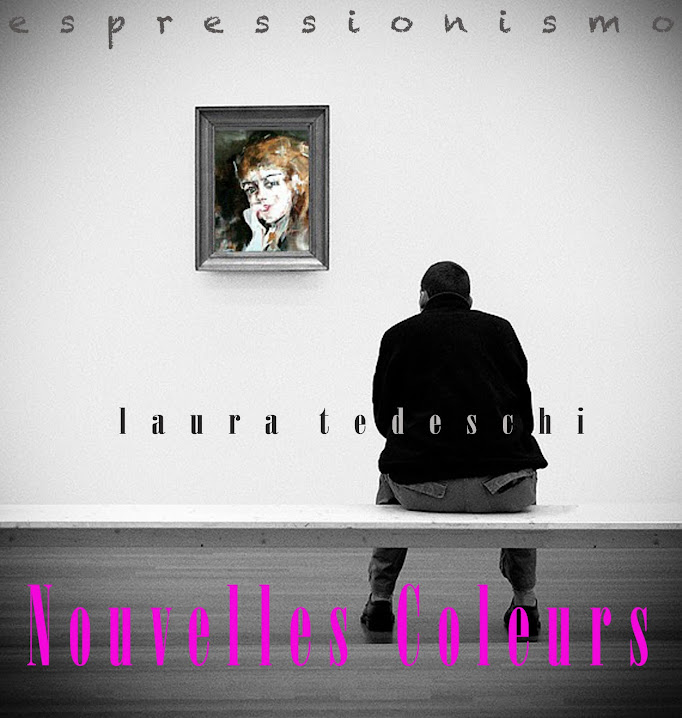
Painting: Laura Tedeschi "Paura, follia"
"Che fai? mia moglie mi domandò, vedendomi insolitamente indugiare davanti allo specchio.
Niente, le risposi, mi guardo qua, dentro il naso, in questa narice. Premendo, avverto un certo dolorino. Mia moglie sorrise e disse:
Credevo ti guardassi da che parte ti pende.
Mi voltai come un cane a cui qualcuno avesse pestato una coda:
Mi pende? A me? Il naso?
E mia moglie placidamente:
Ma sì, caro. Guardatelo bene: ti pende verso destra.
Avevo ventotto anni e sempre fin allora ritenuto il mio naso, se non proprio bello, almeno molto decente, come insieme tutte le altri parti della mia persona. Per cui m’era stato facile ammettere e sostenere quel che di solito ammettono e sostengono tutti coloro che non hanno avuto la sciagura di sortire un corpo deforme: che cioè sia da sciocchi invanire per le proprie fattezze. La scoperta improvvisa e inattesa di quel difetto perciò mi stizzì come un immeritato castigo".
Vitangelo Moscarda scopre, per mezzo di una questione del tutto irrilevante, il fatto che tutti gli altri hanno costruito nella propria fantasia un immagine di lui che non corrisponde a quella che lui crede sia la sua immagine reale.
Il lettore è subito immerso in un gioco crudele di proiezioni falsate, rispecchiando la realtà della vita sociale stessa, che imperiosamente detta le regole. Vitangelo incomincia la difficile operazione che consiste nella distruzione di tutte le maschere fittizie che gli altri vedono nella sua persona. Solo dopo questo passaggio radicale verso la follia e stoltezza agli occhi del mondo, Vitangelo puó finalmente cominciare a seguire la strada verso il suo vero sé. Scopre però che se il suo corpo può essere uno, il suo spirito di certo non lo puó essere. E questa duplicità faustiana si sviluppa gradualmente in una sconcertante molteplicità estremamente complessa. Come si può arrivare a conoscere il vero essere di sé stesso? Vitangelo cerca di prenderlo di sorpresa, spiandolo attraverso la sua anima. Ma questo tentativo di rivelare il segreto di sé, inseguendo il proprio io come se fosse un nemico da fare arrendere, non dà i risultati sperati.
Non appena il sé profondo appare, evapora nell'ignoto, per riapparire sotto forma del sé superficiale. In questo segreto non c'è Sant'Agostino a indicare, con la voce profonda di coscienza, la verità assoluta, l'unità del sé si disintegra in diverse stratificazioni. Vitangelo è una di quelle particolarmente intelligente anime ... che infrangono l'illusione dell'unità del sé e si sentono di essere multiforme...








+8.jpg)


